 |
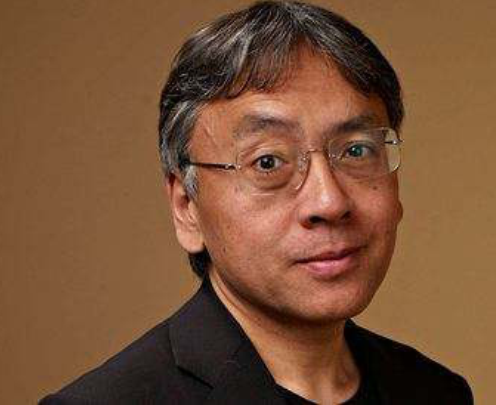
| Kazuo Ishiguro |

Showing posts with label Lewis. Show all posts
Showing posts with label Lewis. Show all posts
Tuesday, October 10, 2017
Kazuo Ishiguro
The award of the Nobel Prize for Literature 2017 to Kazuo Ishiguro, prompted Tencent - China's largest social media site - to contact Dr Barry Lewis, who has published widely on the Anglo-Japanese novelist. Read the interview here.

Thursday, April 03, 2014
First World War conference
 | ||
| Helmuth von Moltke |
- Arwa Ebrahim: 'The Impact of the First World War on the Middle East and its Effect on Arab Women'.
- Dr Barry Lewis: 'Rechewing the Cud: Sebastian Barry's A Long Long Way and the Irish Experience of the First World War'.
- Dr Kath Kerr-Koch: 'From Apokatastasis to Deconstruction: The Legacy of the First World War in the Transfiguration of Modern Thought'.
- Janet Pearson: 'Drifting into the Abyss: Twilight Consciousness in Hermann Broch’s The Sleepwalkers'.
- Dr Fritz Wefelmeyer: '"Overcome by Horror". Helmuth von Moltke, Chief of German General Staff 1906-14, in his letters and memoirs'.
- Fadi Elhusseini: 'The Great War, the Middle East and Islam'.
Wednesday, November 27, 2013
English Research Seminar

Dr Barry Lewis (Sunderland University) will conclude this semester's series of English research seminars on Wednesday 4th December at 5pm with a talk entitled '"Song is the Magic Cape": Thomas Pynchon's Influence on Popular Music'. Staff and students from all faculties are welcome. The venue is Priestman 313.
Tuesday, September 17, 2013
Pynchon and popular music

Barry will be giving a talk on Pynchon and popular music at the English Research Seminar on Wednesday 4th December 2013.
Monday, December 10, 2012
Barry Lewis on Richard Powers

Dr Barry Lewis (English) has published an essay in Ideas of Order: Narrative Patterns in the Novels of Richard Powers, edited by Antje Kley and Jan D. Kucharzewski (Universitätsverlag Winter, 2012). This volume in the American Studies Monograph series, which emerged from a conference on Powers that was held at the University of Erlangen-Nuremberg in November 2010, aims at establishing a critical approach to Powers’ oeuvre which acknowledges and investigates the implications of the distinct poetics of his novels.
In 'Vertical Perfection, Horizontal Inevitability: The Gold Bug Variations', Barry focuses on Powers’ third novel from 1991 and the reading strategies required to unravel the text’s polyphonic narrative structure which echoes the numerical symmetries of Johann Sebastian Bach’s Goldberg Variations. Frequently referencing Powers’ other novels, Lewis explores the simultaneously mimetic and metafictional narrative of The Gold Bug Variations as a complex interrelation of self-reference and world-reference.
Subscribe to:
Posts (Atom)
LinkWithin
