A special issue of the Journal of War & Culture Studies entitled 'Reporting War' has been guest-edited by Dr Angela Smith (English) and Dr Michael Higgins (Strathclyde University). The issue also contains their article 'Strategy, evasion and performance in the live two-way: Kate Adie reporting from Iraq for the BBC'. In it, Angela and Michael explore the use of live two-way interviews in the context of war reporting, using the example of Kate Adie’s reports from the First Gulf War in 1991. The article discusses how such live two-ways are often delivered from a context of approved reporting pools or embedded journalists, and argues that such exchanges are routinely concerned with establishing an ethical framework for the conflict, with establishing alignments between the journalist and the hosting armed forces, and with attesting to the good spirit of the soldiers, rather than engaging in the provision of information. The article also suggests that when information is released through such a live two-way, this tends to be incorporated within an appropriate emotional performance. The article concludes that the live two-way from the theatre of conflict is best understood within the dynamic of the technical affordances of the medium deployed, the necessary strategies of alignment between the reporter and the combatants, and the tactical use of emotional performance.
Wednesday, November 07, 2012
Reporting war
A special issue of the Journal of War & Culture Studies entitled 'Reporting War' has been guest-edited by Dr Angela Smith (English) and Dr Michael Higgins (Strathclyde University). The issue also contains their article 'Strategy, evasion and performance in the live two-way: Kate Adie reporting from Iraq for the BBC'. In it, Angela and Michael explore the use of live two-way interviews in the context of war reporting, using the example of Kate Adie’s reports from the First Gulf War in 1991. The article discusses how such live two-ways are often delivered from a context of approved reporting pools or embedded journalists, and argues that such exchanges are routinely concerned with establishing an ethical framework for the conflict, with establishing alignments between the journalist and the hosting armed forces, and with attesting to the good spirit of the soldiers, rather than engaging in the provision of information. The article also suggests that when information is released through such a live two-way, this tends to be incorporated within an appropriate emotional performance. The article concludes that the live two-way from the theatre of conflict is best understood within the dynamic of the technical affordances of the medium deployed, the necessary strategies of alignment between the reporter and the combatants, and the tactical use of emotional performance.
Monday, November 05, 2012
Neil Ewins in the History Lab
Thursday, November 01, 2012
Mike Pearce uncovers perceptions of dialect differences in Tyne and Wear
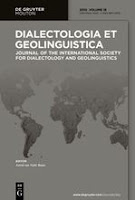
Dr Michael Pearce has published an article in Dialectologia et Geolinguistica which explores folk-perceptions of dialect differences within Tyne and Wear, North East England. It presents a qualitative analysis of responses to an online survey in which participants offered their descriptions of linguistic variation. Michael uses these richly detailed accounts to construct a nuanced picture of lay perceptions of linguistic variation in the region, with particular focus on perceived differences in speech between people from Sunderland and from Newcastle. The article, entitled 'Folk accounts of dialect differences in Tyne and Wear' is the latest in a series of articles Michael has published on the folk linguistics of the region.
Subscribe to:
Posts (Atom)
Do you want to keep up to date with research in Humanities? By entering your email address in the box below you will receive notification whenever a new post gets added to the Humanities Research Blog.